What Are Cleanroom Coveralls (And Why They Matter)
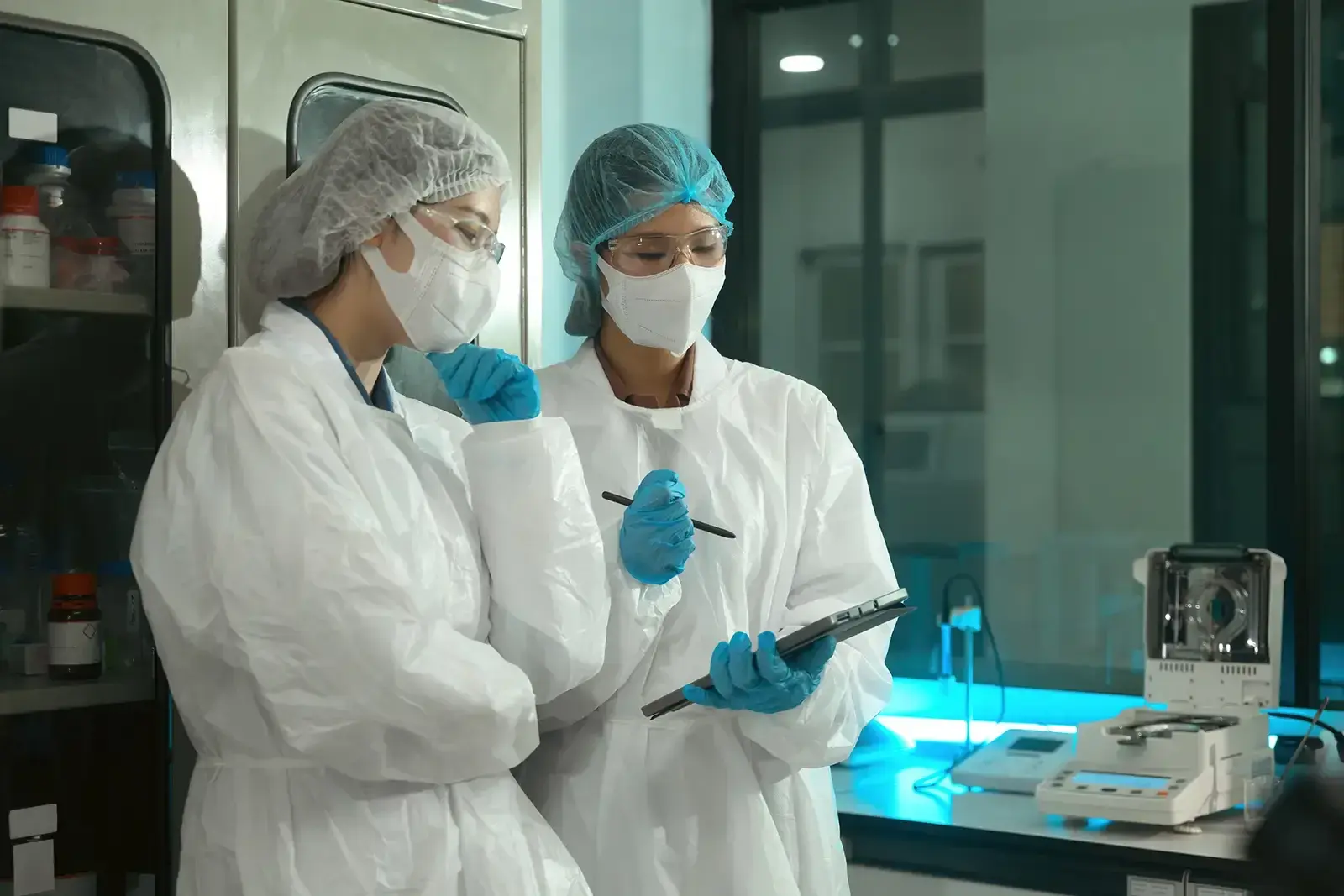
Anyone responsible for a controlled environment eventually runs into the same problem: keeping people from contaminating the very space they're working in. That's the job cleanroom coveralls are built for. These are full-body, low-linting, non-shedding garments designed to keep human-generated contaminants, things like skin flakes, hair, and clothing fibers, out of a controlled space. That's a different goal than standard personal protective equipment, which is built to protect the wearer from outside hazards. Here, the garment protects the room, and whatever is being produced inside it, from the person wearing it. You'll often see this category called cleanroom apparel or cleanroom garments, and all three terms describe the same type of protective wear. Choosing the right option comes down to two main factors: the ISO cleanliness rating of the space, and whether the job calls for disposable, single-use garments or reusable, washable ones. Facility and procurement managers, quality assurance leads, EHS coordinators, and lab or plant managers across electronics, pharmaceuticals, and food processing are usually the ones sourcing these garments, often through uniform rental and facility services programs built around their industry's specific requirements. Getting the details right matters more than it might seem at first glance, since the wrong garment can mean a failed audit, a contaminated batch, or a safety issue that traces back to something as simple as the wrong fabric.
ISO Cleanroom Classifications and What They Mean for Your Coveralls
How ISO Ratings Work
Before you can pick a garment, you need to know what standard your room is held to. Here's how that works:
- ISO 14644-1 is the international standard that classifies cleanrooms from ISO 1, the cleanest, to ISO 9, the least clean, based on the maximum number of particles allowed per cubic meter of air.
- The lower the ISO number, the stricter the environment, and the more demanding the garment and gowning requirements become.
- ISO 4 and ISO 5, once called Class 100, are common in semiconductor fabrication and precision electronics, where even microscopic particles can ruin a product.
- ISO 7, once called Class 10,000, is typical for general biotech and pharmaceutical production areas.
- ISO 8, once called Class 100,000, covers less sensitive manufacturing and packaging environments.
- Rooms in the ISO 4 to 5 range generally call for fully sealed, sterile-packaged, single-use garments changed often. This clean room suit guide walks through proper wear and care as those requirements tighten, while ISO 7 and 8 environments can often get by with reusable coveralls and standard gowning procedures.
- Most facilities already know their certified classification from an outside testing service, but if you're not sure, it's worth confirming before you order garments. Choosing a lower classification than your room actually requires can lead to failed audits or contaminated batches, while over-buying protection for an ISO 7 or 8 space just adds cost without any real benefit.
Reusable Vs. Disposable Cleanroom Coveralls: Choosing the Right Type
Once you know your ISO class, the next decision is whether cleanroom coveralls in your facility should be reusable or disposable. Both types work well under the right conditions, but they solve different problems.
Reusable and Washable Cleanroom Coveralls
- Best suited for high-volume, ongoing operations such as semiconductor fabrication, biotech manufacturing, and electronics assembly, where the same garment program runs day after day. Many facilities manage this volume through industrial uniform rental and cleaning services rather than handling laundering in-house.
- Often built with carbon filaments woven into the fabric to dissipate static electricity, which matters for ESD-sensitive work like circuit board handling.
- Designed to withstand 50 to 100 industrial washes before replacement, making them a durable choice for facilities with steady garment volume.
- Require a controlled laundering process, not standard commercial laundering, to keep their low-linting performance and ESD properties intact over repeated use.
- Cost more per garment upfront but bring the cost per wear down over the life of the coverall.
- Tend to generate less waste over time than single-use programs, which matters for facilities tracking sustainability goals alongside contamination control.
Disposable Cleanroom Coveralls
- Designed for single-use applications where sterility or protection from hazardous liquids and particulates is mandatory, such as pharmaceutical compounding, aseptic processing, and aerospace manufacturing.
- Remove cross-contamination risk between uses since each garment gets discarded after one wear.
- Come in configurations built for the task, including attached hoods, attached boots, and clean-processed versions (manufactured and packaged inside a cleanroom) for the most sensitive work. Following these best practices for using clean room bunny suits helps facilities get the most protection out of those configurations.
- Commonly made from DuPont Tyvek and SMS polypropylene, both covered in more detail below.
- Simplify inventory and laundering logistics, though they create ongoing waste and per-use cost that reusable programs avoid.
- Work well for facilities that need to scale garment volume up or down quickly, since there's no laundering schedule or wash-count limit to plan around.
Materials That Define Cleanroom Garment Performance
The material behind your cleanroom coveralls has as much to do with performance as the cut or classification. Here's what shows up most often:
- DuPont Tyvek: a high-density polyethylene material known for its light weight, low linting, and strong barrier against particulates and light liquid splash. It shows up in most disposable coveralls, though it breathes less than woven fabrics, which is worth factoring in for long shifts.
- SMS polypropylene: a layered spunbond-meltblown-spunbond fabric that balances breathability with particulate filtration, often chosen when workers need comfort during longer shifts. It's a common middle ground for facilities that don't need Tyvek's full barrier strength.
- Polyester and poly-cotton blends with woven carbon fiber grids: used in reusable coveralls to combine durability across many wash cycles with built-in static dissipation.
- Microporous film laminates: add extra liquid and chemical resistance for garments used in hazardous or wet processing environments, though they typically trade away some breathability to get there.
- Fabric weight, measured in GSM, or grams per square meter: lighter weights improve breathability and comfort for extended wear, while heavier weights hold up better and offer stronger barrier protection. Comparing workwear fabric options side by side can help you narrow down which weight fits your process.
Most facilities land on a material after weighing comfort against protection level rather than picking the single "best" option, since a fabric that's ideal for aseptic compounding might be overkill, and uncomfortable, for a lower-classification packaging line.
Key Design Features to Look For in Cleanroom Apparel
Material sets the baseline, but the details of how a garment is built often decide whether it actually keeps a room clean. Look for these features:
- Hood style: attached hoods create one continuous barrier with no gap at the neckline, while separate hoods and coveralls give facilities more flexibility when protection needs vary by task.
- Boot and footwear options: attached boot covers cut down on contamination points at the ankle, while open-ankle designs paired with separate booties allow for quicker changeouts between tasks.
- Wrist and ankle closures: knit cuffs offer comfort and flexibility for repeated reusable wear, while elastic wrists and ankles on disposable garments create a tighter seal against particulates. This lab coat sizing guide is a useful reference when you're trying to get closures and overall fit right the first time.
- Closure systems: front zippers with a storm flap, a covering strip over the zipper, keep particles from escaping through the zipper teeth, which matters most in the strictest ISO environments.
- Extra features worth checking for: thumb loops that keep sleeves in place during movement, and back-entry designs, which are common in aseptic compounding settings where a second person assists with gowning.
ESD and Anti-Static Protection for Sensitive Environments
Electrostatic discharge, or ESD, is a separate concern from particulate contamination, and it's easy to overlook if your focus has been on cleanliness rather than electronics. Even a small static charge from someone's clothing can damage sensitive components like semiconductors and circuit boards, sometimes without anyone noticing until the product fails later on. ESD protection is typically built into reusable coveralls through a grid of conductive carbon filaments woven right into the fabric, which dissipates static charge before it has a chance to build up and discharge. These garments matter most in semiconductor fabrication and electronics assembly, and they're usually paired with other grounding measures like wrist straps and ESD flooring, so it helps to review your facility's industrial safety clothing requirements alongside your ESD needs. That said, not every cleanroom needs this kind of protection. Pharmaceutical and biotech environments are usually more concerned with particulate and microbial control than static, so garment selection should match the actual risk in the room rather than a one-size-fits-all standard.
Industries That Rely on Cleanroom Coveralls
Cleanroom coveralls show up across a wider range of industries than people expect, and the requirements shift quite a bit from one to the next.
- Semiconductor and Electronics Manufacturing
Requires ISO 4 to 5 reusable, ESD-rated coveralls to protect sensitive components from both particulates and static discharge during chip fabrication and assembly. A single stray charge or fiber can scrap a wafer worth thousands of dollars, so gowning procedures here tend to be the strictest of any industry.
- Pharmaceutical and Biotech Production
Relies on disposable and sterile coveralls for aseptic processing and compounding, often governed by standards like USP <797> for sterile drug preparation. Many of these facilities also lean on healthcare uniform and linen services for the rest of their garment and linen needs, since sterile compounding areas usually sit alongside less sensitive clinical or lab space.
- Aerospace Manufacturing
Uses disposable coveralls with attached hoods and boots to keep precision components free of particulates during assembly and inspection. Contamination in this industry tends to show up later, as a reliability issue in the field, which makes prevention at the assembly stage especially important.
- Medical Device Manufacturing
Combines particulate control with sterility requirements, frequently using clean-processed disposable garments for the most sensitive production stages. Devices that are implanted or used in surgery generally call for the highest level of garment control in this category.
- Food and Beverage Processing
Uses lower-ISO-class (7 to 8) reusable or disposable coveralls to meet health code and contamination control standards, without the sterility demands of pharma or the ESD demands of electronics. Facilities in this space often pair that with broader food and beverage uniform and linen services for the rest of their team's needs, from kitchen linens to everyday workwear.
How to Choose the Right Cleanroom Coveralls for Your Facility
With all of that in mind, here's a practical way to work through the decision:
- Confirm Your ISO Classification
Identify the ISO class your room is certified to. This determines the baseline garment and gowning requirements you'll need to meet before anything else.
- Decide Between Reusable and Disposable
Weigh your garment volume and consistency of use, which favors reusable and washable programs, against sterility or hazard exposure needs, which favors disposable.
- Assess ESD Requirements
Figure out whether your process involves static-sensitive components. If it does, prioritize garments with woven carbon fiber grids and check their ESD test ratings, and plan to pair them with other grounding measures on the floor.
- Confirm Sterility Needs
Check whether your process requires sterile, gamma-irradiated garments, common in aseptic compounding, or clean-processed non-sterile garments. These come with different sourcing timelines and cost implications, so it helps to nail this down early rather than mid-order.
- Get Sizing and Closures Right
Order a full size range, typically XS to 5XL, and confirm closure features like hoods, boots, and zipper storm flaps match your gowning procedure. This uniform sizing and fitting guide is worth keeping on hand for this step.
- Compare True Cost and Lead Time
Calculate cost per wear for reusable programs against cost per use plus disposal for single-use garments, and confirm your supplier can meet your reorder timeline without gaps in supply. This uniform buying guide can help you weigh those numbers before you commit to a program.
Keeping Your Facility Compliant Beyond the Cleanroom
At the end of the day, choosing the right cleanroom coveralls comes down to matching ISO classification, material, and features like ESD protection, sterility, and closures to what your facility actually needs day to day. None of that decision should feel separate from how you manage the rest of your team's gear. The same standards that matter inside a cleanroom, consistent hygiene, dependable supply, and garments that hold up to the job, apply just as much to the uniforms, linens, and facility products keeping the rest of your operation running. Alsco Uniforms has spent more than a century providing clean, professional, and reliable uniform rental, linen, and facility services to businesses in 12 countries. That kind of track record is worth something when you're trying to keep a facility audit-ready year after year, not just get through the next inspection. Whether you're outfitting a cleanroom or the rest of your facility, it's worth talking with Alsco about industrial uniform and facility services built around your industry's specific compliance and reliability needs.