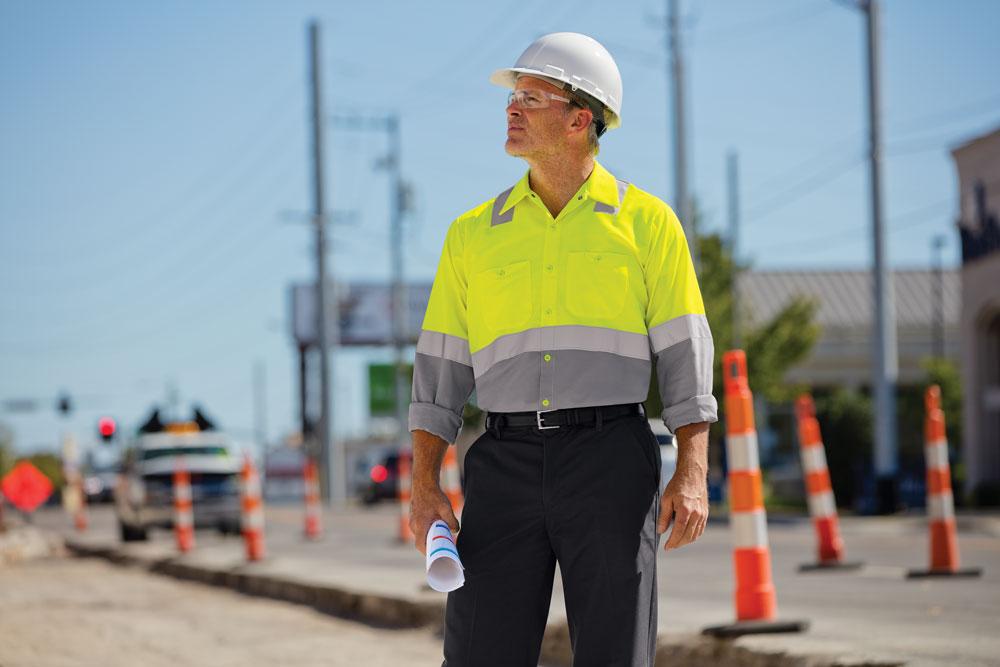
Choosing a high-visibility uniform program comes down to two things: putting every worker in the right ANSI class for the hazard, and keeping those garments compliant after months on the job. For construction and utility crews working near traffic, after dark or in bad weather, that usually means Class 3 high visibility clothing. Color and reflective striping matter, but so do fit, laundering, replacement and how consistently the program runs across every site.
This guide covers how ANSI classes work, which colors and materials to choose and what to look for in a vendor that will keep crews visible week after week.
Start With the Right ANSI Class for Each Role
ANSI/ISEA 107-2020 is the U.S. standard for high-visibility safety apparel. It sorts garments into performance classes based on how much fluorescent background material and retroreflective striping they include, and into types based on where they're worn: Type O for off-road work, Type R for roadways and Type P for public safety. For a deeper look at the standard, see our guide to high-visibility clothing requirements and ANSI classes.
Class | Typical construction and utility use | What it requires |
|---|---|---|
Class 1 (Type O) | Off-road work away from traffic, such as warehouses and parking lots with vehicles under 25 mph | The least background and reflective material; not for roadway work |
Class 2 (Type R) | Most road, construction and utility work near traffic up to about 50 mph or near heavy equipment | More coverage, usually a vest or shirt with reflective bands around the torso and over the shoulders |
Class 3 (Type R) | Traffic over 50 mph, low light, bad weather and complex work zones where workers need to be seen from farther away | The most coverage, with reflective material on the sleeves (and often legs) so the body's outline is visible |
Federal rules also require workers within the right-of-way of federal-aid highways to wear Class 2 or Class 3 apparel. Many safety teams default to Class 3 high visibility clothing for roadside utility work and night shifts because the sleeve coverage creates a recognizable human outline. Pairing a Class 2 top with Class E pants or shorts also makes a Class 3 ensemble. Assign classes by role and task, not by crew, so a flagger and a site supervisor aren't automatically wearing the same thing.
What Are the Advantages of High-Visibility Colors?
Some of the benefits associated with high visibility colors include the following:
- Safety: High visibility colors can increase safety in potentially hazardous environments. They’re commonly worn by construction workers, road crews, and emergency services personnel, so these workers can be easily seen even under low-light conditions. Bright, attention-grabbing colors help reduce accidents because drivers can more easily see these workers.
- Awareness: High visibility colors stand out and draw attention. These colors are used in many different ways, including traffic signs, road markings, or safety equipment like cones and barriers. They immediately attract attention and make pedestrians and drivers more aware of potential hazards.
- Easier compliance checks: When every worker is in the right class and color, supervisors and inspectors can see at a glance who is properly equipped for the task.
- Crew identification: Consistent colors and company logos help drivers, the public, inspectors and other contractors recognize your crew on a busy multi-employer site.
What Colors Are Best Suited to High Visibility Uniforms?
High visibility workwear is most effective when designed to feature colors that stand out, such as neon orange, yellow, and green. Each of these colors offers its own set of advantages and sends a different message.
Neon or Bright Orange
Neon orange is easy to spot from far away in most settings, and because it's widely associated with caution, drivers tend to slow down when they see it. That makes it a common choice for road crews and traffic control.
Neon Yellow
Neon yellow, also called safety yellow or fluorescent yellow, stands out in both bright and low light, so it works all day. It's common in construction, road maintenance and emergency response, where workers need to be identified quickly.
Neon Green
ANSI/ISEA 107 recognizes only three fluorescent background colors: yellow-green, orange-red and red. Pink, blue and other neon shades can be eye-catching, but garments in those colors can't be certified to an ANSI class, so they aren't a substitute for compliant gear on a job site.
Background still matters with compliant colors. Fluorescent red, for example, can blend into brick, signage or fall leaves, so look at where crews actually work before standardizing on a color. For more on how ANSI assigns colors to hazards, see our guide to industry-standard safety colors.
Other Neon Colors
All colors that have a fluorescent glow, including pink, red, and blue, can also be effective for high visibility needs. Depending on the situation and use, they may not be as effective for low-light conditions or certain industry requirements.
Though they’re always a consideration, background materials and colors are especially important for neon reds and blues. These colors’ visibility may be negatively affected depending on their surroundings or when compliance with industry regulations and standards is an issue.
Which Is Better for High Visibility: Fluorescent Colors or Retroreflective Material?
Fluorescent colors and reflective materials both offer distinct advantages when it comes to visibility. Their effectiveness depends on the circumstances.
Fluorescent colors like neon orange, yellow, and green stand out against backgrounds because they contrast sharply. This makes them useful in environments where visibility is essential, even though their effectiveness in low-light scenarios may be diminished.
Retroreflective materials reflect light back at its source, making wearers more visible even in low-light conditions like dawn or dusk. Their visibility extends farther than ambient light sources alone.
Retroreflective and fluorescent materials should be chosen based on the situation for which they are needed. Factors like lighting conditions and whether active or passive visibility is desired should be considered when making this decision.
Ultimately, fluorescent colors offer increased daytime visibility, whereas retroreflective materials are great for low-light conditions. Using both can maximize visibility. ANSI-compliant garments combine the two, and Class 3 high visibility clothing adds the most retroreflective material, including bands on the sleeves and often the legs, so crews stay visible from dawn through night shifts.
Is Black an Effective Hi-Visibility Color?
No, black is not a good choice in situations where high visibility is a priority. Dark colors in general should not be chosen when high visibility is needed. Black absorbs rather than reflects light, making individuals and objects harder to see.
Instead, brighter or fluorescent colors offer better contrast against all backgrounds, so people wearing them are easily recognized. Choosing high-visibility colors reduces accident risk and increases overall safety.
What to Look for in a High-Visibility Uniform Program
The garment is only part of the decision. Compare vendors on how well they keep the right gear on every worker, on every site:
- Class matched to every role: including outerwear, rain gear and coveralls, so the class doesn't drop when the weather turns.
- Fit and comfort: sizing for the whole crew, layering for cold and lighter fabrics for heat. See our guide to hot-weather clothing for construction.
- Care and replacement: laundering that follows manufacturer instructions, plus regular checks for faded color, cracked tape and tears. ANSI doesn't set a fixed lifespan, so ask how often PPE is inspected.
- New hires, temps and size changes: how quickly new workers get correctly sized gear.
- Consistency across sites: the same class, color and logo standard everywhere, with predictable delivery and records for each site.
- Logos that don't break compliance: placement that doesn't cover required fluorescent or reflective material.
- FR and hi-vis together: for utility crews facing arc flash or flash fire. See our guide to choosing an FR uniform vendor.
Compare the full program cost, not just the price per garment, since buying means handling laundering, inspection and replacement yourself. Our guide to renting vs. buying workwear covers the trade-offs.
Questions to Ask a Hi-Vis Uniform Vendor
- Which ANSI class and type is each garment certified to, and can you show the label?
- How do you launder and inspect hi-vis garments, and what triggers a replacement?
- How fast can you outfit new hires, temps and size changes at each site?
- Can you deliver on the same schedule to all our locations?
- What's included in the price, and what costs extra?
Get the answers in writing. If workers push back on the change, these tips on rolling out a new uniform program can help.
Alsco Uniforms: Hi-Vis Uniform Programs for Construction and Utility Crews
Alsco Uniforms offers customizable hi-vis workwear through a managed rental program built for crews working near traffic and heavy equipment. Options include ANSI Class 2 and Class 3 garments, such as the Type R, Class 3 Long Sleeve Hi-Vis Ripstop Work Shirt with MIMIX and OilBlok, along with hi-vis jackets, insulated and waterproof outerwear and coveralls. Garments can be embroidered with your logo, and FR options are available for crews that need flame resistance and visibility together.
We pick up soiled garments on schedule, launder and repair them to hygienically clean certified standards and deliver them back, with sizing changes and replacements handled through your regular service. With more than 150 facilities nationwide, we can keep multi-site crews in consistent gear. See how we support industrial teams.
Explore our hi-vis and FR workwear, and get a quote for a program built around your crews.
High-Visibility Uniform Program FAQs
What is Class 3 high visibility clothing?
Class 3 high visibility clothing is the highest performance class under ANSI/ISEA 107. It has the most fluorescent background material and retroreflective striping, including coverage on the sleeves, so workers can be seen from farther away and their body outline is easy to recognize.
When is Class 3 required instead of Class 2?
Class 3 is typically called for when workers face traffic over 50 mph, work at night or in poor weather, or need to be seen from a greater distance. Your hazard assessment, local rules and project specifications make the final call, and many highway and utility contracts specify Class 3.
What should be included in a high-visibility uniform program for a multi-site crew?
Class assignments by role, correctly sized garments for every worker, laundering and inspection, clear replacement criteria, fast coverage for new hires and temps, consistent delivery to every site and records you can pull for audits.
How often should hi-vis clothing be replaced?
There's no fixed schedule. Replace hi-vis garments when the fluorescent color has faded, reflective tape is cracked, peeling or missing, or the garment is torn or too soiled to clean. Regular inspection matters more than a calendar date.
References
High Visibility: Safety Gear That’s More Than Just Bright Colors. (June 2022). Previsor Insurance.
Hi Vis 101: Everything You Need to Know. Occupational Health and Safety. (June 2021).
High Visibility Safety Apparel. (December 2021). Canadian Centre for Occupational Health and Safety (CCOHS).
Updated November 2026.